





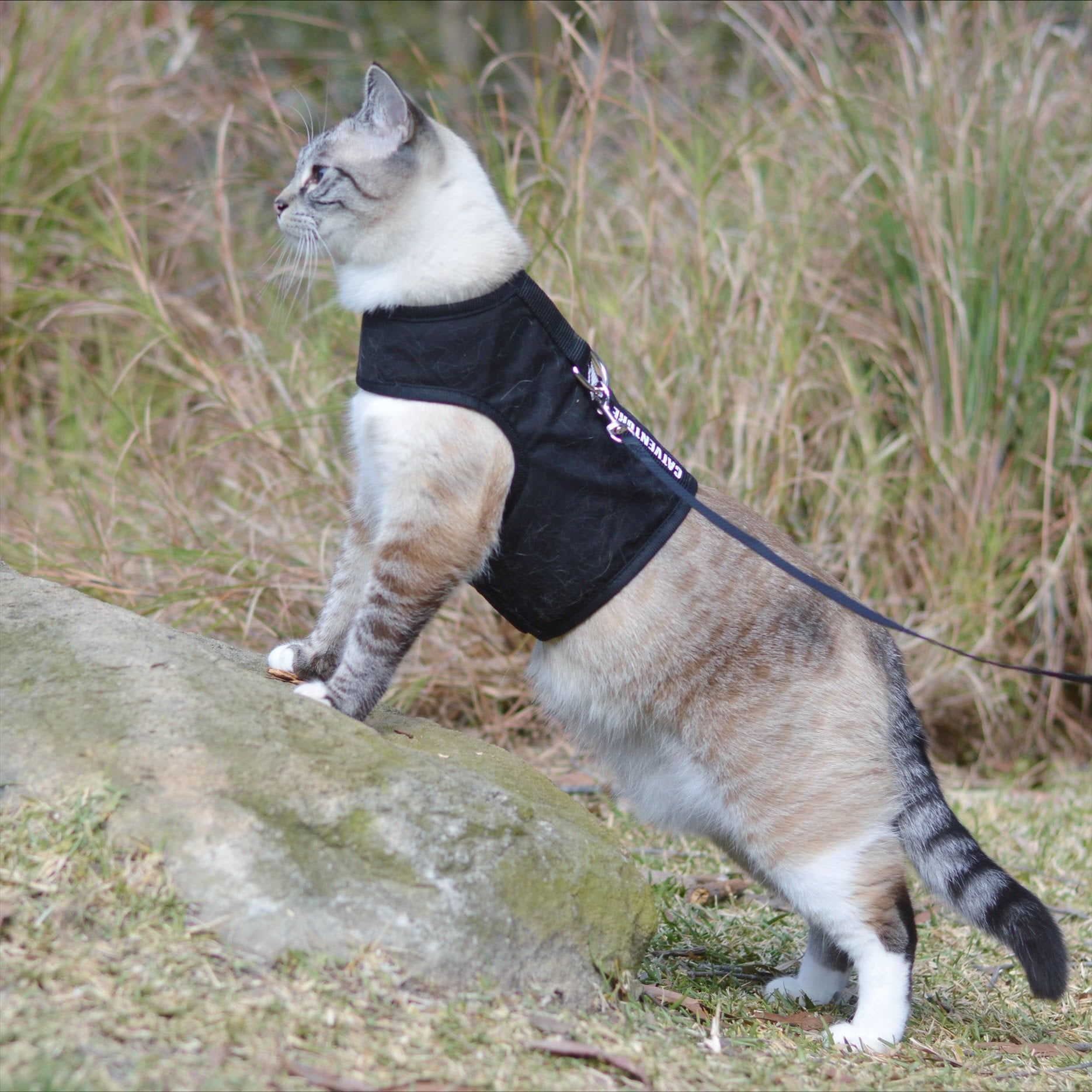


The Complete Beginner’s Guide To Walking Your Cat Outdoors Safely In Australia
Walking your cat is nothing like walking a dog. It is slower, more sniffy and very much on your cat’s terms. Done right, it is one of the best ways to enrich an indoor cat’s life while keeping them and our native wildlife safe.
This guide walks you through everything you need to know for your cat’s first adventures – from choosing safe locations to reading body language and avoiding common Aussie hazards.

In this guide
What “Walking A Cat” Really Means
Most first-time cat walkers imagine a brisk, straight-line stroll around the block. Cats have a very different agenda. A good cat walk looks more like:
- Stop and sniff every interesting leaf, fence post or blade of grass.
- Walk a few metres, then sit and watch birds for a while.
- Double back to the exact same spot they explored five minutes ago.
- Change direction instantly when a new smell catches their attention.
In other words, cat walks are slow, curious and led by your cat. Your job is to keep them safe, support their choices and manage the environment.
Core Safety Principles For Australian Cat Walks
Australia is beautiful but it is not always gentle. Before you choose a route, it helps to keep a few non-negotiables in mind.
- Always supervised – harnesses and leads are not a replacement for supervision.
- Short lead distance – this keeps you close enough to release tension if your cat reverses.
- Start in quiet spaces – no off-leash dogs, loud traffic or busy footpaths at first.
- Check the weather – avoid the hottest part of the day and wet, windy conditions that can spook nervous cats.
- Respect wildlife – keep your cat away from nests, waterbird areas and fragile bushland.
Essential Gear For Safe Cat Adventures
You do not need a lot of equipment to walk your cat, but the basics matter. Good gear means fewer problems and a much better experience for your cat.
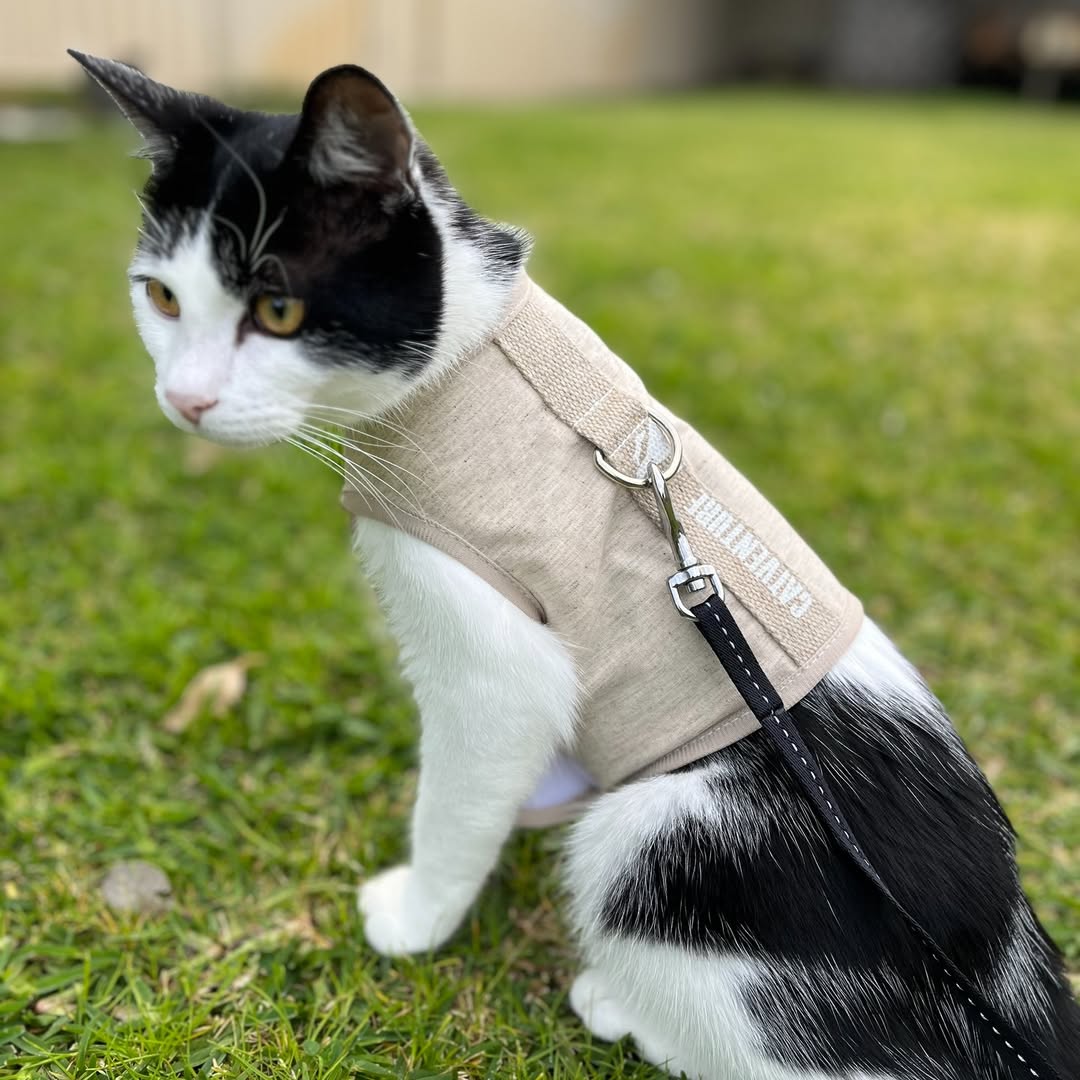
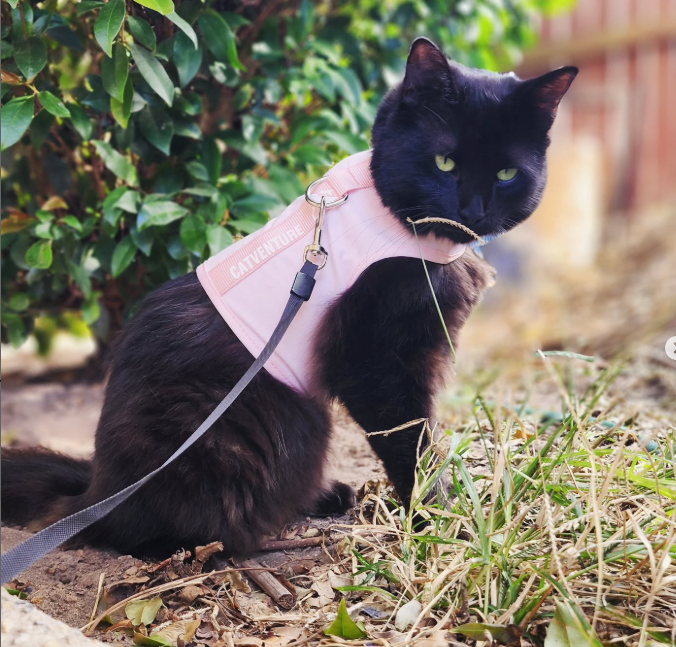
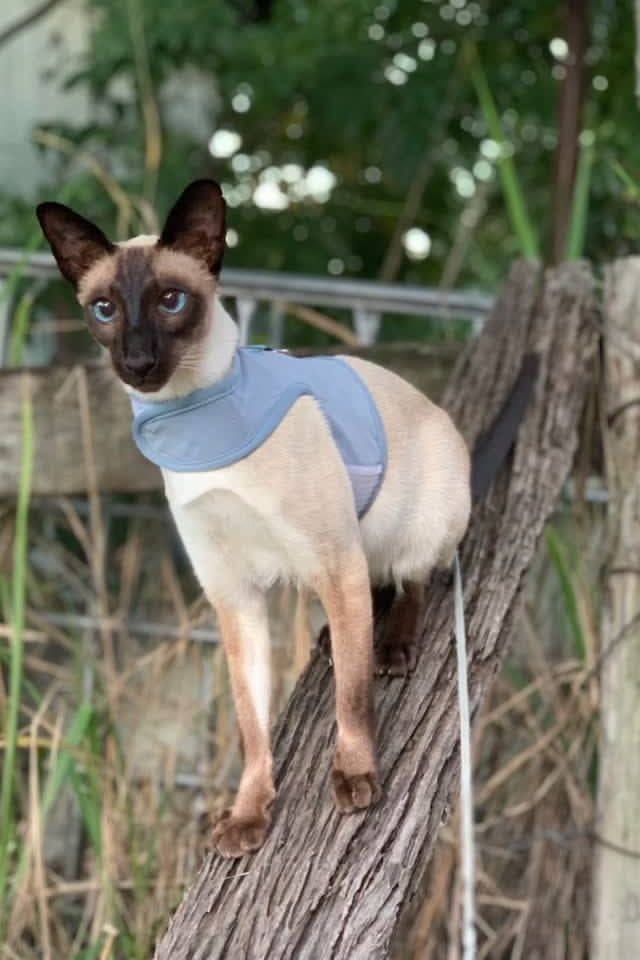
Your harness is your main safety tool. The Catventure Harness is a vest-style cotton harness designed for:
- Soft, breathable comfort in Australian weather.
- Pressure distributed across the chest instead of the throat.
- A snug, adjustable fit that supports natural movement.
- Escape resistance through its patterning, when used with a suitable lead.
Aim for a fit where you can slide one to two fingers under the harness. If it is looser than that, your cat has room to reverse out once they get enough distance and leverage.
For new walkers, a standard-length lead is usually safer than a long or fully extended retractable lead. Staying within one or two steps of your cat allows you to:
- Step forward quickly if they begin to reverse.
- Guide them gently away from dogs, prams or bikes.
- Prevent the harness from being used as something to “fight against”.
As your handling skills and your cat’s confidence improve, you can carefully give a little more distance in safe spaces. The key is to never let the lead become a constant, tight rope that your cat can pull against.
Even with great gear and supervision, accidents happen. Make sure your cat has:
- An up-to-date microchip linked to your current phone number.
- A secure breakaway collar with an ID tag if they tolerate collars.
- Recent photos in case you ever need to create a lost poster.
Most people are keen to help a found cat – having clear ID makes it much easier for them to reach you quickly.
A simple setup to keep near the door could include:
- High-value treats to reward brave moments and recalls.
- A light towel or blanket in case you need to scoop and wrap your cat if they get a fright.
- Dog poo bags or a small bin bag for any accidents.
- Water on warm days or for longer outings.
Choosing The Right First Locations
The environment you choose has a bigger impact on your cat’s experience than the length of the walk. Quiet, predictable spaces help them learn that the outside world can be safe and interesting.
- Balcony or courtyard – great for cats who have never been outside.
- Backyard or secure garden – familiar smells and less foot traffic.
- Quiet side path or cul-de-sac – low noise and fewer dogs.
The goal is not to go far. It is to let your cat gather information about the world while they feel safe enough to stay curious.
- Quiet park edges during off-peak times.
- Leafy walking paths where dogs must be on lead.
- Cat-friendly holiday cabins or enclosed garden stays.
Always keep an eye out for off-leash dogs, kids on scooters and fast bikes. These are the most common triggers for sudden spooks on otherwise calm outings.
- Busy dog parks or off-leash dog beaches.
- Main roads and noisy shopping strips.
- Areas with lots of children, skateboards or bikes.
- Dense bushland with poor visibility and lots of rustling undergrowth.
As your cat gets more confident, you can slowly introduce slightly busier areas – but there is never a need to walk through chaos to have a good adventure.
Planning Your Cat’s First Walk
Think of your first walk as a “preview session” rather than a workout. You are setting the tone for every adventure that follows.
Timing
- Choose a quiet time of day – early morning or later in the evening.
- Avoid the hottest part of the day, especially in summer.
- Check the forecast for sudden rain or strong winds.
Session length
For the first proper outdoor walk, aim for 5 to 10 minutes. End on a win – ideally when your cat is still curious rather than overwhelmed or exhausted.
Before you step outside
- Make sure the harness is snug and secure.
- Clip the lead on indoors and let them walk a few steps first.
- Take treats, a towel and your phone just in case.
Reading Your Cat’s Outdoor Body Language
Your cat’s body language tells you whether to stay, move on or head home. Learning to read these signals is one of your most powerful safety tools.
- Tail held at a neutral or softly raised position.
- Ears facing forward or swivelling gently to track sounds.
- Loose, flowing movements rather than stiff, low-to-the-ground steps.
- Choosing to sniff, rub or roll in the environment.
- Tail low, puffed or tucked tightly under the body.
- Ears pinned back or constantly flicking backwards.
- Very fast, low movements or freezing in one spot.
- Trying to retreat under cars, bushes or behind your legs.
When you see these signs, give them more distance from the trigger or calmly head home. Pushing them to keep going usually makes the next walk harder.
If a dog barks, a truck brakes or something drops nearby and your cat panics:
- Shorten the lead and step towards them to release tension.
- Speak softly and move calmly – fast, jerky movements can increase panic.
- If they are very distressed, scoop them in a towel or jacket and return to the car or indoors to reset.
On the next outing, choose a quieter space and a shorter session so they can rebuild their confidence.
Common Australian Hazards To Keep In Mind
Part of being a responsible adventure cat guardian is being realistic about our environment. A few extra checks go a long way towards keeping your cat safe.
- Heat – hot pavements and direct sun can be too much for cats, especially dark-coated ones.
- Ticks and insects – talk to your vet about appropriate parasite prevention for outdoor time.
- Snakes and spiders – avoid long grass, rock piles and heavy undergrowth in warmer months.
- Dogs – off-leash dogs are the most common cause of outdoor scares for cats on harnesses.
- Plants – some garden plants are toxic if chewed. Supervise and redirect if your cat likes to nibble.
Beginner FAQs About Walking Cats On Harness
Many vets are comfortable with kittens starting gentle harness training once they have had their core vaccinations and are physically strong enough. Adult and senior cats can also learn – you might just progress a little more slowly and choose softer, shorter outings.
There is no single correct number. Some cats are happy with two short outings per week. Others thrive on a daily ten-minute sniff session. Start small, then adjust based on your cat’s enthusiasm and energy.
It is best to train each cat individually until they are calm, confident walkers. Once each cat has solid skills, some families successfully walk two cats together in very controlled environments. Always prioritise safety and your ability to respond quickly if one gets spooked.
Not every cat will love full walks – and that is completely fine. Many are perfectly happy with balcony time, supervised yard time or sitting on a safe verandah in their harness watching the world go by. The goal is not to force a particular lifestyle, but to offer safe enrichment options that suit your cat.
Ready To Take Your First Catventure?
The Catventure Harness is designed here in Australia to help cats explore safely, with soft cotton fabric, a secure fit and a pattern created specifically for feline bodies.

