





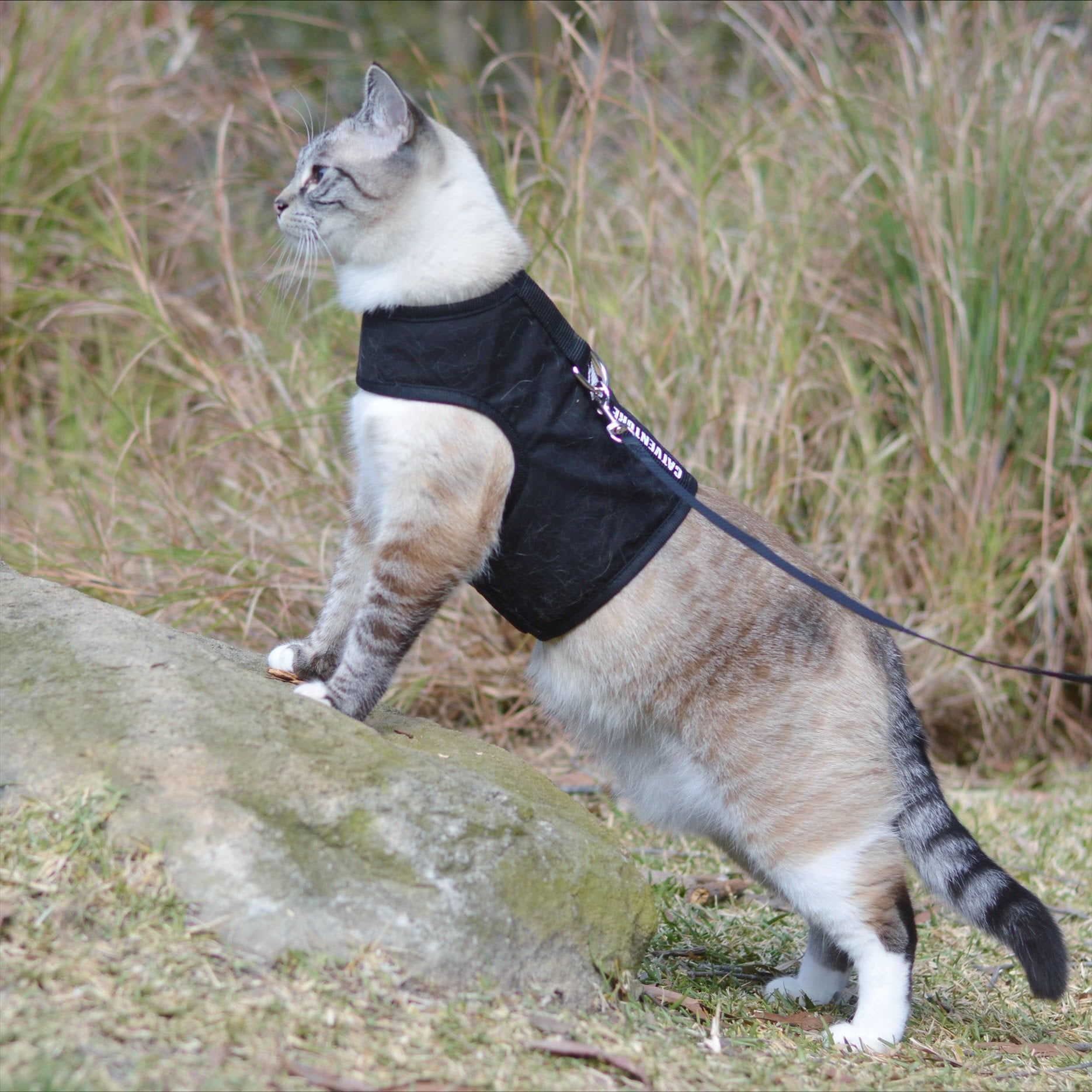


Safe Places To Explore With Your Cat In Australia: Parks, Paths And Quiet Spots
Australia is full of beautiful places to explore with your cat – from leafy local paths and quiet reserves to coastal walks and shared trails. The key is choosing locations that are safe, legal and genuinely cat friendly.
This guide walks you through how to choose safe spots, what to avoid (including strict national park rules), how to plan your routes and why a cat backpack or carrier is just as important as the harness and lead.
What we will cover
Use this as your planning checklist before you head out with your cat on their next adventure.
- Why supervised outdoor time is different to roaming
- Important Australian rules: national parks, wildlife and dogs
- Safety basics: harness, lead, backpack and retreat plans
- Australia wide map: types of safe spots
- Neighbourhood walks and local paths
- Quiet parks, reserves and shared spaces
- Waterfronts, river walks and coastal paths
- Exploring with two cats or more
- Choosing the best time of day and season
- Red flags: places to avoid with your cat
- How to plan routes using maps and satellite view
- Real adventure examples from Catventure customers
- FAQ: common questions about where you can take your cat
Why Supervised Outdoor Time Is Different To Roaming
Letting your cat roam freely outdoors in Australia comes with serious risks – for them and for native wildlife. Supervised adventures in a harness and lead give your cat the smells, textures and experiences they crave without those risks.
Benefits of supervised outdoor exploring
- Safer for your cat reduces risk of cars, dog attacks, snake bites and getting lost
- Safer for wildlife prevents hunting of birds, reptiles and small mammals
- Builds confidence gradually introduces new sights and sounds with you right there
- Strengthens your bond outdoor time becomes something you do together
- Reduces door dashing gives a controlled outlet for the desire to explore
Many Catventure cats are indoor only or indoor plus enclosed balcony cats, and their harness adventures are the highlight of their week.
Important Australian Rules: National Parks, Wildlife And Dogs
Before deciding where to go, it is important to understand the rules that apply in most parts of Australia.
In many Australian states and territories, domestic cats are not permitted in national parks and some nature reserves, even on a harness or in a backpack. This is to protect sensitive native wildlife and habitats and to reduce predation and stress on wild animals.
Always check the local state government or park authority website for the exact rules in your area. If cats are not allowed, choose local council parks, shared paths or other public spaces instead.
Many Australian parks and beaches have dedicated off leash areas for dogs. These can feel overwhelming or unsafe for cats, even if your cat is used to calm dogs at home. For most cats, it is best to avoid:
- Off leash dog parks
- Busy dog beaches
- Popular shared paths at peak dog walking times
If you do use a shared space, plan to keep your cat close and have a backpack or carrier ready so you can scoop and retreat quickly if an off leash dog appears.
Rules can differ between councils and states. Before visiting a new spot:
- Look up the park or path on your council website
- Search for “dogs on leash”, “off leash area” and “domestic animals”
- Check signs when you arrive and be prepared to change plans if needed
Safety Basics: Harness, Lead, Backpack And Retreat Plans
Exploring with your cat is about safety first, adventure second. Before choosing locations, make sure your set up supports calm, controlled outings.
Your essential adventure kit
- Cat specific harness like the Catventure Harness, fitted snugly with no sagging
- Lightweight lead short or standard length so you can easily step in if needed
- Cat backpack or carrier for safe retreat on public paths, near dogs or if your cat is overwhelmed
- Poop bags to clean up after your cat just like you would a dog
- Water and collapsible bowl especially in warmer months
- High value treats to reward checking in with you and calm exploring
Think of the backpack or carrier as your cat’s “portable safe room”. They should be used to it and associate it with comfort, not only emergencies.
Before you start walking, quietly answer these questions:
- If a dog suddenly appears, where will you step, and how will you lift your cat?
- Do you have the backpack or carrier open and ready to use?
- Is there a quieter side path or exit nearby if the main path feels too busy?
Having a plan reduces your stress, which helps your cat feel calmer and safer too.
Neighbourhood Walks And Local Paths
The best place to start adventuring with your cat is often just outside your front door. Local streets, laneways and short cut paths can offer plenty of variety without long car trips or complex logistics.
Good neighbourhood options
- Quiet cul de sacs with minimal traffic
- Back streets one block away from busy main roads
- Short pedestrian paths between houses or blocks
- Apartment complex gardens or internal courtyards (with permission)
How to make local walks cat friendly
- Walk at quieter times – early morning or later evening
- Keep the lead short so your cat stays close and you can scoop quickly
- Bring the backpack or carrier even for very short outings
- Start with just sitting near your home and letting your cat sniff the air

Quiet Parks, Reserves And Shared Spaces
Once your cat is comfortable near home, you can slowly introduce them to quiet parks and reserves that allow pets (and do not conflict with local rules). Here, your job is to pick spaces that feel safe, not busy.
Use this as a mental checklist when you arrive. If too many are missing, it may be a day to switch locations.
You want to be able to see off leash dogs, bikes or runners approaching with enough time to calmly scoop your cat and move away.
- Avoid tight corners where a dog could rush around without warning
- Favour open lawns and wide paths with gentle curves
- Stay near the edge of spaces so you can step out quickly if needed
The safest parks for cats have side paths, tree lines or smaller pockets where you can retreat if the main area becomes busy.
- Check for secondary paths on the map before your visit
- Walk the perimeter first to see where you could move if needed
- Aim to stay within a short walk of your “safe exit” point
Bare, sunny open fields are often too harsh for cats, especially in Australian summers. Look for:
- Tree lined paths with dappled shade
- Soft grass or leaf litter rather than hot gravel or asphalt
- Areas away from loud playgrounds or sports fields
Good park examples (by type)
- Small neighbourhood reserve with one or two benches and no playground
- Council maintained “bush pocket” with short loop tracks
- Linear trail along a creek set back from roads
- Foreshore path with grass and trees between the path and water
Waterfronts, River Walks And Coastal Paths
Many Australian cities and towns have beautiful paths along rivers, lakes and coastlines. These can be amazing sensory experiences for cats – fresh breezes, water bird sounds and constantly changing smells.
Choosing waterfront spots carefully
- Pick calmer sections away from off leash dog beaches
- Look for paths with grassy buffers between you and the water’s edge
- Avoid very exposed breakwalls or piers with strong winds
- Check for no dogs allowed signs – great for cats if pets are fully banned and the rules suit your cat’s set up
Exploring With Two Cats Or More
If you have a bonded pair or multiple cats, it can be tempting to take them out together straight away. In reality, it is usually safer and calmer to train each cat individually first.
Why individual training first
- Each cat will have their own sensitivity level to dogs, bikes and noise
- If one cat panics, the other often mirrors that stress
- You need two hands free to manage the harness, lead and backpack for one cat at a time
Once both cats are confident solo, you can experiment with very short, quiet outings together, ideally with a second human to help.
For multiple cats, consider:
- One backpack or carrier per cat, or
- A sturdy double carrier for bonded pairs who find comfort together
Your retreat options need to match the number of cats, not just one “shared” carrier that might not fit everyone calmly in a rush.
Choosing The Best Time Of Day And Season
In Australia, time of day can completely change how safe and cat friendly a location feels.
Best times for most cats
- Early morning cooler temperatures, fewer dogs and less traffic
- Later evening after peak dog walking hours but before full darkness
- Weekdays usually quieter than weekends in popular parks
Seasonal considerations
- In summer, avoid heat and hot surfaces (early or late only)
- In winter, aim for mild daylight hours with less wind exposure
- After heavy rain, some paths may be muddy, slippery or full of puddles
If your cat is crouched low, ears pinned and eyes wide, it may be too busy or noisy for them. Scoop them into the backpack or carrier and move to a quieter area, or head home. Adventure days are meant to build confidence, not push through fear.
Red Flags: Places To Avoid With Your Cat
Some locations are almost always a “no” for cat safety, even if they are convenient or popular with dogs and humans.
Use this as a quick mental filter when scouting new locations.
Even the friendliest dogs can be overwhelming for cats, and not all owners have reliable recall. Avoid designated dog parks, and be cautious around popular dog beaches and narrow off leash trails.
If signs or websites say “no domestic animals”, that includes cats – even in harnesses or backpacks. Choose alternative locations that welcome pets instead and respect wildlife protection rules.
Fast, quiet bikes on narrow paths can startle cats and leave little room to move aside. Look for wider paths or times when bike traffic is minimal, or avoid those routes altogether.
Cats can be surprisingly sure footed, but a sudden fright or bird movement could still cause a slip. Stay well back from any risky edges and keep the lead short near changes in elevation.
How To Plan Routes Using Maps And Satellite View
A few minutes of map research can save you from awkward or unsafe situations once your cat is already outside. Here is a simple process you can repeat whenever you want to try a new location.
Step by step planning process
- Search your area Type your suburb plus “linear park”, “shared path”, “greenway”, “creek trail”, “foreshore walk” or “river walk”.
- Switch to satellite view Look for tree cover, path width and how close the path is to roads or water.
- Check council or park website Confirm that pets are allowed and whether dogs must be on leash.
- Plan a short loop first Pick a route with multiple exit points in case it is busier than expected.
- Save a backup spot Have a second option nearby (like a quiet side street) in case the main location does not feel right on the day.
Real Adventure Examples From Catventure Customers
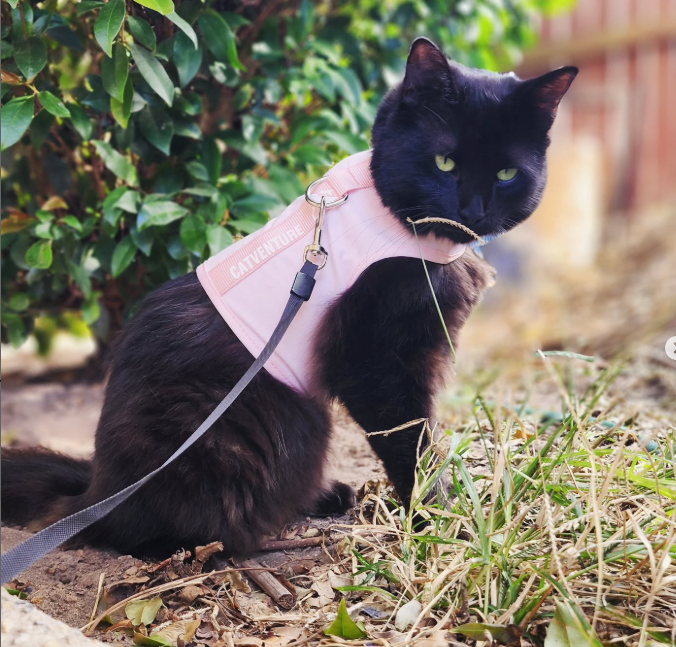
Many of our customers started with nervous rescue cats or indoor only cats who had never worn a harness before. With slow training, careful location choice and a focus on safety, their cats now enjoy regular supervised adventures.
FAQ: Common Questions About Where You Can Take Your Cat
In many areas of Australia, domestic cats are not permitted in national parks or some nature reserves at all – even if they are in harnesses or carriers. Always check local rules for the park you want to visit. If cats are not allowed, choose alternative locations such as council maintained parks, greenways or shared paths.
Yes, it is strongly recommended. A backpack or carrier gives your cat a safe place to retreat if a dog appears, a loud noise startles them or the environment becomes overwhelming. Even on short walks close to home, it is much easier to manage tricky moments if your cat can be safely contained and comforted.
Think in minutes and experiences, not kilometres. Your first outings might only cover a few metres. What matters is that your cat has positive associations, can retreat when they want to and finishes the experience feeling more confident than when they started.
Even friendly dogs can frighten cats, especially on lead. Calmly and firmly let the owner know “My cat is nervous around dogs, could you please give us space?” At the same time, scoop your cat into the backpack or carrier and put distance between you and the dog if possible. Your cat’s sense of safety comes first.
Build Your Cat’s Adventure Map, One Safe Spot At A Time
Exploring Australia with your cat is not about ticking off the busiest tourist spots, it is about finding the quiet corners, shady paths and gentle trails where they can sniff, watch and move at their own pace.
With a well fitted Catventure harness, a lightweight lead and a reliable backpack or carrier, you can give your cat safe, supervised outdoor time that matches their personality and the rules that protect our wildlife.
Explore The Catventure Harness For Safe Australian Adventures

