


Why Cats Escape Other Styles Of Harnesses And How To Prevent It
If your cat has ever reversed out of a harness and left you holding an empty lead, you are not alone. Escapes are usually about fit, design and handling, not your cat being “naughty” or you doing something wrong.
The good news is that with the right size, a snug fit and a few simple lead skills, you can make harness escapes extremely unlikely.

In this guide
Why Cats Escape Harnesses In The First Place
Cats are flexible, clever and extremely good at finding gaps. When they escape a harness, it is usually a mix of:
- Fit issues harness is a size too big or not fastened snugly enough.
- Design issues thin straps sit in the wrong place and slide over the shoulders.
- Lead issues long leads give cats enough distance and leverage to reverse out.
- Emotional state a panicked cat will push harder against pressure to get away.
The important thing to remember is that this is physics, not failure. With enough distance and force, any animal can get out of almost anything. Our goal is to set things up so that your cat never has that much distance or that much force to work with.
Common Harness Styles And Where Cats Slip Out
You will see lots of different harness styles on the market. Without naming brands, most of them sit in three broad categories:
These harnesses use thin straps across the chest and around the girth. They can work for some cats, but the pressure is often focused on narrow areas and the gaps between straps can be large.
Common escape point: the cat reverses and the shoulder straps slide up behind the elbows and over the shoulders.
Step in styles usually have leg holes that the cat steps through, then the harness fastens on top. If the leg openings are generous, flexible cats can sometimes step back out of them.
Common escape point: the cat backs up, shrugs their elbows free and steps out of the leg openings.
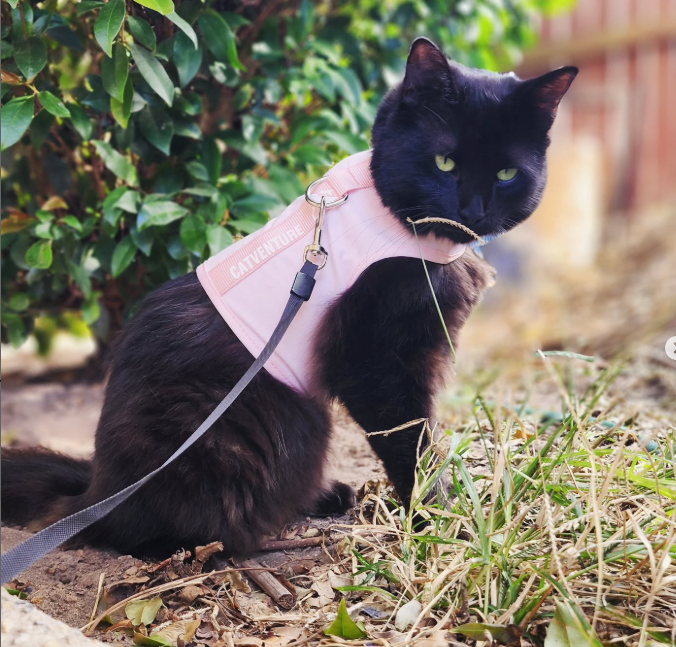
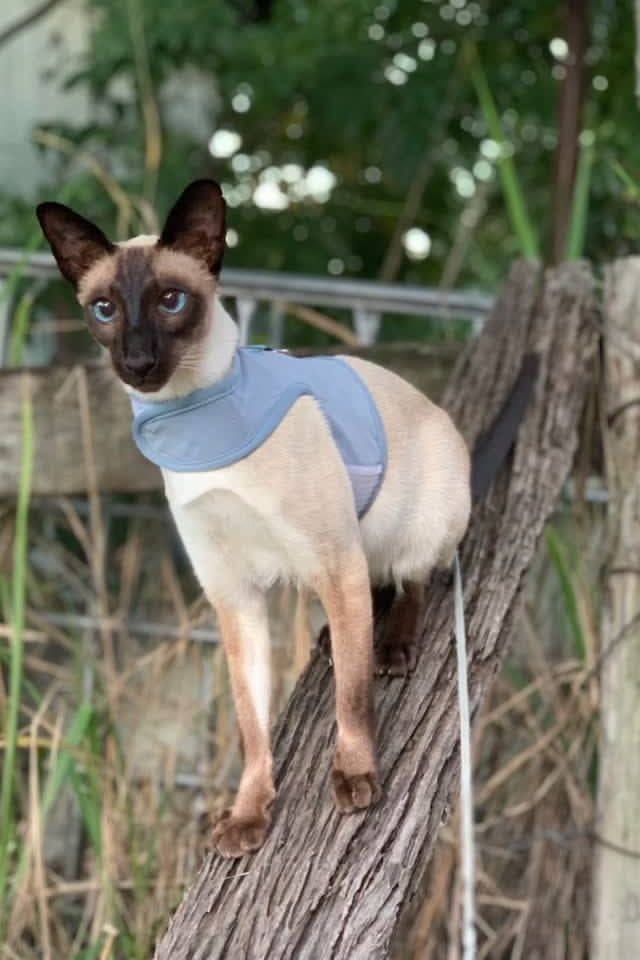
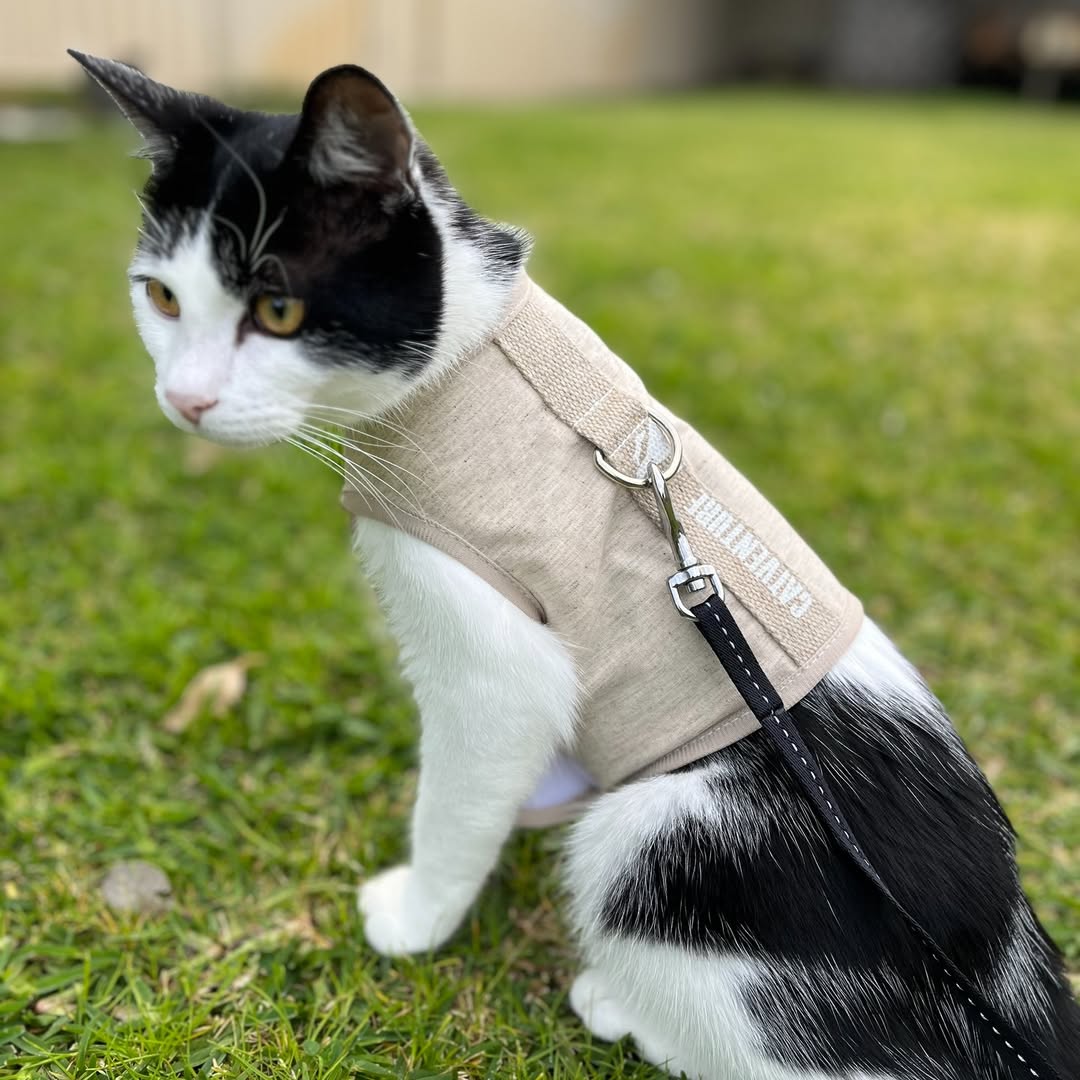
Vest style harnesses provide more coverage and distribute pressure more evenly across the chest. This is the style Cat Harness Australia chose for the Catventure harness.
When sized correctly and worn snugly, vest style harnesses are generally harder to escape from than thin strap styles. Escapes usually indicate a size that is too big or straps that are not fastened firmly enough.
Design helps, but no design can override physics if a harness is very loose and the cat has four metres of lead to reverse against. That is why size and handling matter as much as the style.
Why A Snug Catventure Fit Matters So Much
The Catventure harness was designed to be escape resistant when used as intended. That means:
- The correct size for your cat’s measurements.
- A snug fit with no big gaps under the chest or behind the front legs.
- A human close enough to manage lead tension and step in if needed.
What “snug” actually means
A lot of people are understandably worried about making harnesses “too tight”, so they leave more looseness than they realise. In reality, a safe snug fit looks like:
- You can just slide one finger under the harness, but not your whole hand.
- The chest panel sits flat against the body, not gaping or drooping.
- The harness does not shift dramatically when your cat walks or rolls.
If your cat can back up and you see the harness lifting high off their shoulders, that is usually a sign it is too big or not done up firmly enough.
A correctly sized and snug Catventure harness should sit close to the body while still allowing free movement.
Lead Handling Mistakes That Cause Escapes
Fit is one half of the equation. The other half is how the lead is used. Even a perfectly fitted harness can be defeated if a cat has a very long lead and can pull hard against constant tension.
If your cat is four metres away from you, they often have enough momentum and time to get themselves into a “reverse and shrug” position. By the time you react, they may already be halfway out.
Fix: Use a shorter lead and keep your cat within one or two steps of you, especially when they are still learning or in new environments.
Cats can only back out if they have something to push against. If there is a constant tight line between you, they can brace and push backwards until the harness starts to slide.
Fix: When your cat starts to reverse or lean back, take two or three quick steps towards them. This releases the tension and removes the “wall” they are pushing against. No tension, no escape.
Treat cat walks as “sniff missions” where you stay slightly behind or beside your cat, not towing them like a dog. Walking ahead often keeps the lead tight and encourages pulling.
Fix: Let your cat lead the pace. Use the lead to keep them safe and close, rather than to set a marching speed along a path.
Why Tethering Cats Is Unsafe And Not Recommended
It can be tempting to clip your cat to a long line in the yard and let them “self entertain”. We strongly advise against tethering your cat unsupervised for several reasons.
Cats move in three dimensions. They climb, spin, roll and change direction quickly. A tether can easily wrap around legs, furniture, plants or railings. In the worst cases, this can tighten around the neck or body.
A sudden noise, dog or bird of prey can send even a confident cat into full panic. On a tether, they may throw their whole body weight against the harness to try to flee, increasing the chance of injury or escape.
With a person present, you can scoop, soothe and remove your cat from the situation within seconds. A tether cannot do that for them.
Tethered cats cannot move away from threats. Off leash dogs, roaming cats or foxes can still reach them, but your cat is unable to retreat to safety. This is the opposite of what we are trying to achieve with supervised, controlled outdoor time.
Escape Prevention Checklist
Before each adventure, run through this quick checklist to stack everything in your favour.
- Size: Have you measured your cat and chosen the correct Catventure size?
- Fit: Can you slide only one to two fingers under the harness, no big gaps?
- Position: Does the harness sit flat on the chest and shoulders, not drooping?
- Lead: Are you using a sensible length that keeps you within one or two steps?
- Tension: Are you ready to step towards your cat if they start to reverse?
- Environment: Is this space quiet enough that your cat is unlikely to panic?
- Supervision: Will your cat be supervised the entire time, with no tethering?
A well fitted Catventure harness, a sensible lead length and active supervision are the foundations of escape resistant adventures.
FAQs About Escaping And Sizing
It almost always means one of two things: the harness is a size too big, or it is not being fastened snugly enough. With enough looseness and a long lead, clever cats can work their way out of most setups. Send us clear photos from the top and side and we can help you check size and fit.
No harness can override physics. With enough time, distance and pressure, any animal can work out how to get out of almost anything. The Catventure harness is designed to be highly escape resistant when:
- The correct size is chosen.
- It is fitted snugly.
- A human is close enough to manage the lead and help if the cat panics.
That combination is what makes escapes very unlikely in real life use.
For adult cats, sizing up usually makes escapes more likely. For kittens, it is better to choose the size that fits now and plan to replace it when they grow, rather than having months in a too loose harness that they can back out of.
We do not recommend tethering at all. Even a secure harness cannot protect a cat from tangles, strangulation risks, approaching animals or panic when no human is there to help. Supervised time on a lead, catio or balcony is always the safer choice.
Need Help With Fit Or Escapes?
Our team at Cat Harness Australia is here to help you make adventures safe and enjoyable. If your cat has escaped or you are unsure about sizing, send us photos and details and we will happily guide you.

