


How to Train Your Cat to Wear a Harness (Without Stress Or Drama)
If you have ever clipped a harness on your cat and watched them flop like a sad pancake, you are not alone. With the right steps, even cautious or anxious cats can learn to love their adventures. This guide walks you through a proven, cat-first method used by thousands of Australian cat parents.
From nervous indoor cats to confident adventure pros, it all starts with a calm introduction and a well-fitted harness.

In this guide
Why Harness Training Is Worth It For Australian Cats
Australian cats live in a unique environment. We share our suburbs with sensitive native wildlife, busy roads, dogs, snakes and open bushland. Free roaming might look “natural”, but it carries serious risks for both cats and wildlife.
Harness training solves this problem by giving your cat supervised outdoor time. They can sniff, climb, roll and watch the world while you stay in control of where they go and what they encounter.
- Physical health · Walking, exploring and even slow “sniffaris” help maintain a healthy weight and joint mobility.
- Mental stimulation · New smells, textures and sights prevent boredom and frustration in indoor cats.
- Confidence and resilience · Gradual exposure to safe outdoor experiences builds a more confident, adaptable cat.
- Safer for wildlife · Your cat enjoys nature without hunting birds, lizards or small mammals.
- Deeper bond · You become your cat’s guide outdoors, not just the person who fills the food bowl.
The Role Of The Harness: Comfort First, Security Second
A lot of problems people experience with harness training actually start with the harness itself. If it is heavy, stiff or cuts into the shoulders, cats quite reasonably decide it is not worth moving in.
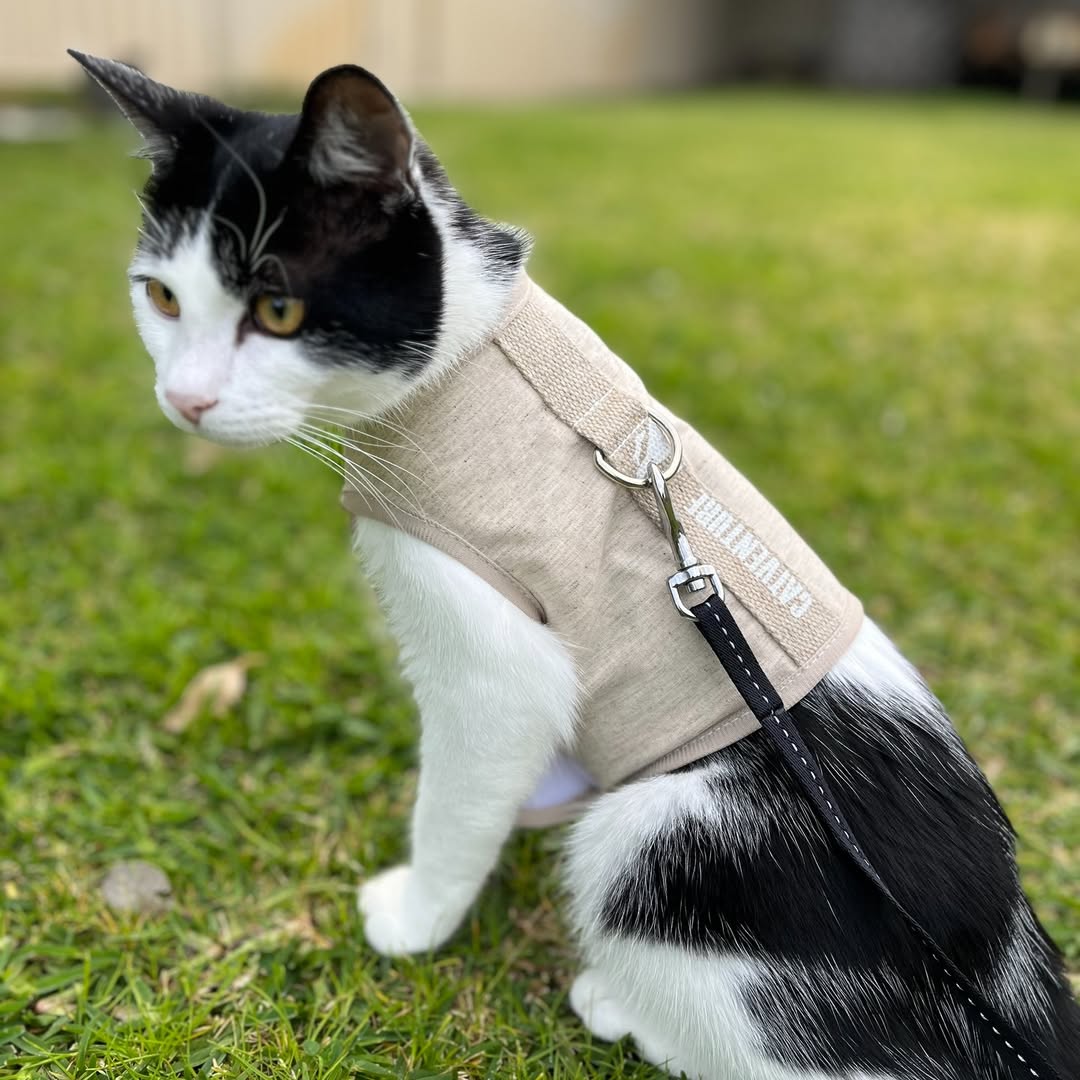
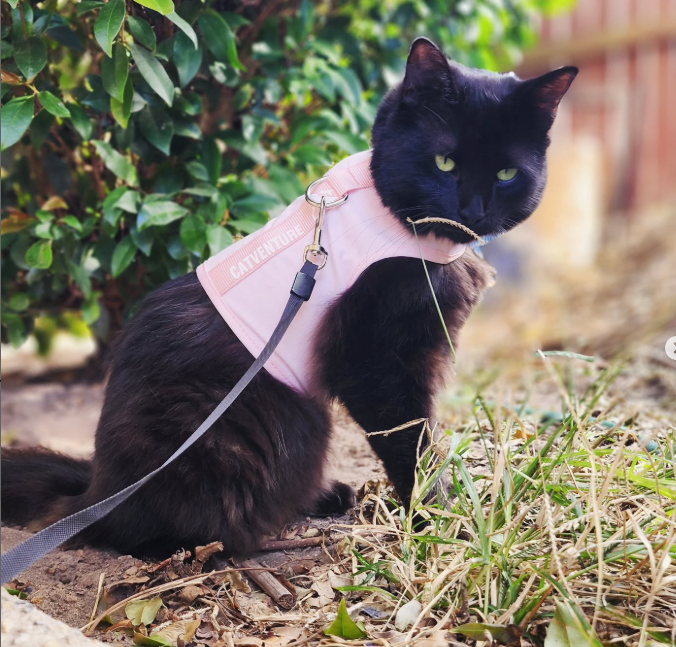
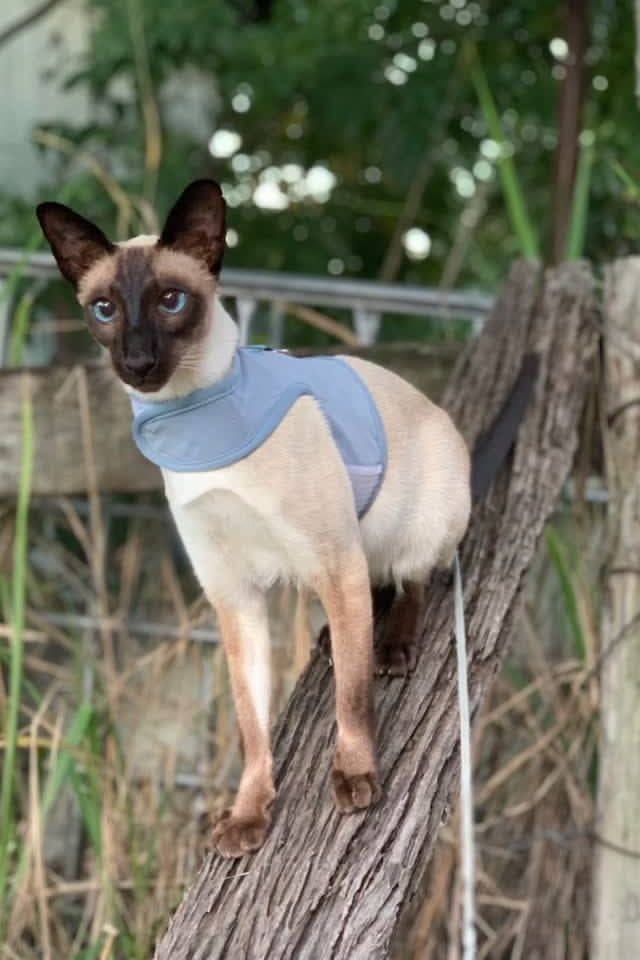
The Catventure Harness was designed specifically for cat anatomy and Australian weather:
- Soft cotton outer that is breathable, even on warm days.
- Vest-style coverage that distributes pressure across the chest instead of pulling on the throat.
- Secure but adjustable fit so you can keep it snug without over-tightening.
- Escape-resistance through patterning rather than relying on restrictive straps.
When you combine a comfortable harness with a step-by-step approach, most cats go from “statue mode” to confident walkers far faster than people expect.
The 4 Training Phases (And How Long Each One Takes)
Harness training is easiest when you think of it as a series of phases. You can move up a phase once your cat looks relaxed and curious, not stiff or flattened. Some cats move through all four phases in a week. Others take a month. Both are normal.
Goal: Your cat sees the harness as safe and familiar.
Place the harness near your cat’s favourite sleeping spot or food bowl for 2 to 3 days. Let them sniff, rub against and investigate it without any pressure.
- Reward any interaction with treats or gentle praise.
- Lightly touch them with the harness while patting so it becomes part of “cuddle time”.
- Avoid surprising them by sneaking it on while they sleep.
Typical time frame: 1 to 3 days.
Goal: Your cat can walk, eat and play while wearing the harness.
Start with just a few minutes at a time. Clip the Catventure Harness on firmly but comfortably, distract with food or a favourite toy, then remove it before they get stressed.
- Begin with 3–5 minute sessions, two or three times a day.
- Encourage movement with wand toys or treat trails.
- Ignore the “pancake flop” and reward even one or two steps.
Typical time frame: 3 to 7 days.
Goal: Your cat learns that gentle lead pressure is a cue, not a trap.
Attach the lead and let it trail for a few minutes while you closely supervise. Then pick up the lead and simply follow your cat. Do not pull or drag. Instead, use light pressure as a “suggestion” and reward every step in the direction you want.
- Practise stopping and rewarding when your cat comes back to you.
- Teach a simple recall word such as “this way” or their name.
- Keep the lead short at this stage so they do not build habits of pulling or backing away.
Typical time frame: 3 to 10 days depending on confidence.
Goal: Calm, curious exploration in a controlled outdoor space.
Start in the quietest area you have access to, such as a courtyard, balcony, enclosed garden or quiet corner of the yard. Let your cat choose the pace. Your job is to stay close, keep the lead slack and step toward them whenever they begin to reverse.
- Begin with 5–10 minute sessions and end on a positive note.
- Avoid busy paths, dogs and loud noises for the first few outings.
- Build up to new environments only after they look relaxed in the first spot.
Typical time frame: ongoing. Confidence grows with every calm session.
Lead Skills That Prevent Harness Escapes
Even the best-fitted harness can be defeated if a cat gets four metres of lead and enough leverage to reverse out of it. This is why Cat Harness Australia recommends shorter leads and close supervision, especially in the early stages.
Why long leads make escaping easier
When a cat has a very long lead, they can walk far enough away from you to:
- Build strong backward momentum if they get spooked.
- Angle their body into a “reverse and shrug” position.
- Pull continuously against the harness while you are too far away to step in quickly.
With enough distance and time, any animal can work out how to get out of almost anything. That is physics, not a reflection of your cat’s harness or your care as an owner.
The “step in to release tension” technique
The safest way to stop reversals is incredibly simple:
When there is no tension, there is nothing to “push against”, which makes it almost impossible for them to shrug the harness over their shoulders.
Lead habits to build from day one
- Keep the lead short enough that you can reach your cat within one or two steps.
- Reward your cat for checking in with you and walking back towards you.
- Avoid dragging or towing. Lead pressure should be a suggestion, not a force.
- Practise calm, slow “sniff walks” rather than marching in a straight line.
Troubleshooting: Flopping, Freezing, Backing Out And Sudden Spooks
Almost every cat parent experiences at least one of these behaviours. They are not failures, just information about how your cat is feeling.
This is your cat’s version of “if I act like a rug, maybe this thing stops touching me”. It is very common in the first few sessions.
- Use high-value treats or a favourite toy to encourage even a few steps.
- Practise on carpet or rugs where they feel secure underfoot.
- Keep early sessions short so they do not rehearse flopping for long periods.
Freezing means your cat has gone over their comfort threshold. The sights, sounds or smells are too much to process at once.
- Step back to an earlier phase, such as a balcony, enclosed yard or even near an open door.
- Let them watch the outdoors from a safe distance before asking them to walk in it.
- Stay under 5 minutes and end sessions with something predictable like dinner.
Backing out combines two things: a loose or borderline fit, and consistent tension on a long lead.
- Check that you can only just slide one finger under the harness.
- Switch to a shorter lead and practise stepping towards your cat when they reverse.
- Keep early sessions in very low-stimulation environments so they are less likely to panic.
Sudden loud noises, dogs, kids on scooters or even a dropped bin lid can startle an otherwise confident cat.
- Carry a lightweight towel or blanket on early walks so you can scoop and wrap if needed.
- Return your cat to the car or home base to reset, rather than forcing them to continue.
- Next time, choose a quieter route or time of day until their confidence is solid.
Special Considerations For Nervous, Indoor-Only Or Rescue Cats
Many Cat Harness Australia customers adopt cats from rescues or keep their cats indoors for safety. These cats can benefit enormously from harness training, but they also tend to be more sensitive to change.
Go slower than you think you need to
If your cat has a history of trauma, moves house often or is naturally cautious, double the timeline you would use for a confident kitten. It is better to have ten calm sessions in the hallway than one overwhelming walk in a busy park.
Use predictable routines
- Clip the harness on at roughly the same time of day.
- Pair sessions with something they love, like wet food or a favourite toy.
- Use the same phrase each time you go out, such as “adventure time”.
Watch for small signs of progress
Progress for a nervous cat might look like:
- Moving from hiding under the bed to watching you put the harness on from across the room.
- Taking three steps in the harness instead of two.
- Choosing to sniff near the open door instead of backing away.
Frequently Asked Questions About Harness Training
Most confident young cats take 1 to 3 weeks to move from first introduction to short outdoor adventures. Older, nervous or rescue cats may take a month or more, which is completely normal. The goal is steady progress, not speed.
No. When done correctly, harness training gives cats more choice and enrichment, not less. The harness prevents dangerous roaming while still allowing them to smell, explore and enjoy the world. As long as you respect your cat’s pace and keep sessions positive, it is kinder than letting them roam unsupervised.
Yes. Older cats may move more slowly through the phases and might prefer shorter, quieter outings, but many enjoy the stimulation and gentle exercise. Always check with your vet if your cat has mobility or heart issues.
If your cat is growling, swatting or completely shutting down, pause and go back to Phase 1 or 2. Shorten sessions, increase rewards and remove other stressors (like loud TV, visitors or other pets) during training. Some cats will always prefer balcony time or supervised yard time to full walks, and that is perfectly fine.
Ready To Start Your Cat’s First Catventure?
The Catventure Harness is designed in Australia to help cats explore safely and comfortably, with a focus on fit, breathability and escape resistance when used as intended.
