






Cat Harness Training Problems: Flopping, Freezing, Bunny Hopping And How To Fix Each One
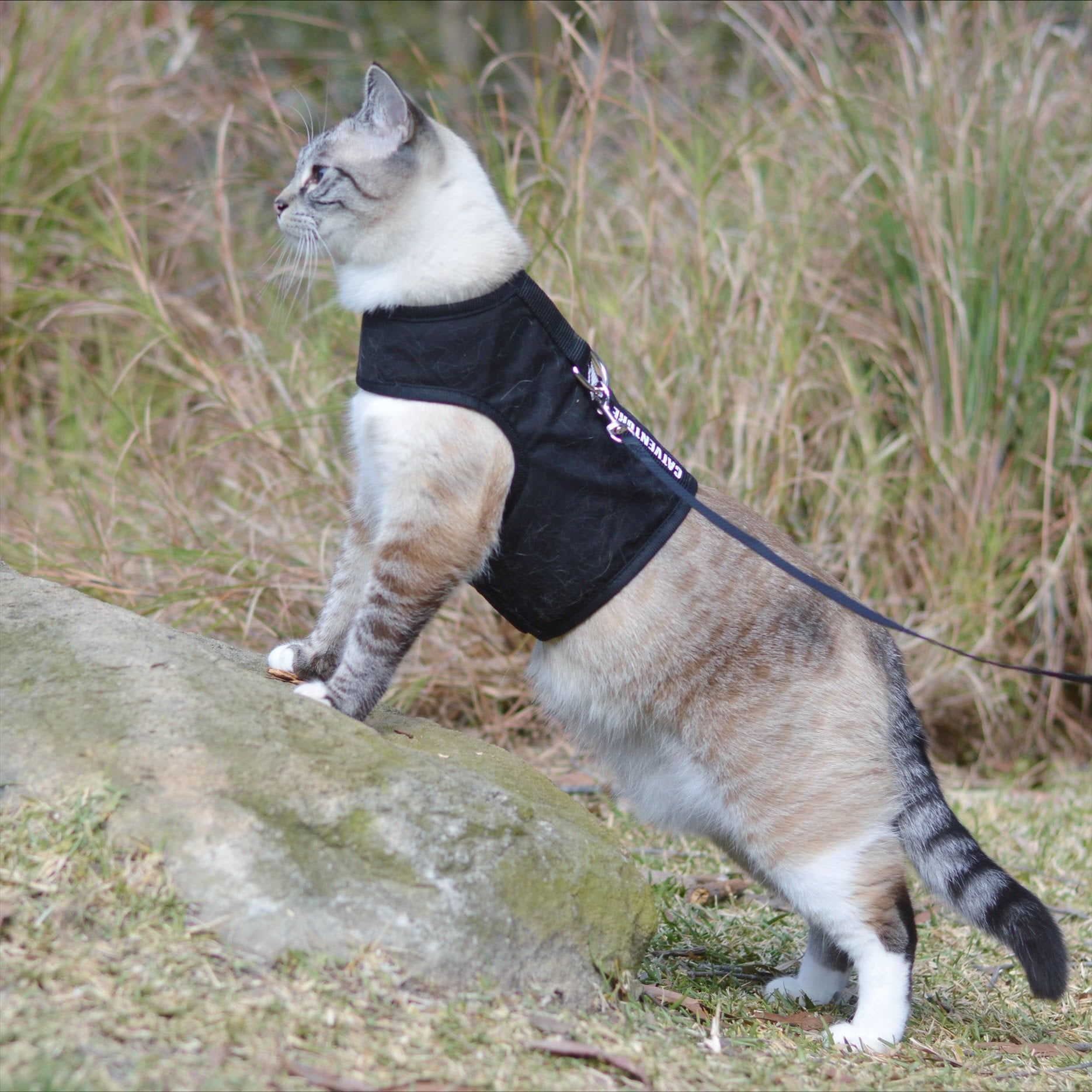
Put the harness on and your cat immediately flops, freezes like a statue or starts doing strange little bunny hops. It looks dramatic, but these behaviours are normal and very fixable when you understand what your cat is trying to tell you.
This guide breaks down the four most common harness training problems and gives you step by step, behaviour based strategies to gently turn panic into confidence.

In this guide
Why Cats React Strangely To Harnesses
From a behaviour perspective, your cat is not being dramatic or stubborn. They are simply reacting to a new sensation around their body that they do not fully understand yet.
- Body awareness: cats are very sensitive to anything that changes how their fur and skin feel.
- Survival instincts: if something touches their back or sides, their brain initially asks “is this safe” before “is this fun”.
- Learning history: if they have never worn clothes or collars, all of this is brand new information.
Flopping, freezing and bunny hopping are all versions of the same message. Your cat is saying “I am not sure what to do with my body right now”. Our job is to respond in a way that makes them feel safer, not more overwhelmed.
Flopping: “I Have Lost My Bones”
Flopping is when your cat collapses dramatically to the floor, often lying on their side or belly and refusing to stand up. Some will roll a little, then lie very still, staring at you with big eyes.
What a behaviourist would say is happening
- Your cat is using a “collapse and wait” strategy instead of fight or flight.
- The new sensation of the harness has temporarily interrupted their normal movement pattern.
- They are not necessarily terrified, but they do not yet feel confident to move.
Do not do this
- Do not drag them along the floor by the lead.
- Do not clap, raise your voice or try to “jolly them along”.
- Do not immediately remove the harness every time they flop, or they learn “flop = harness comes off”.
Step by step fix for flopping
- Start with micro sessions indoors. Put the Catventure harness on, reward with a treat, then remove it after 30 to 60 seconds of calm.
- Reward tiny movements. If they lift a paw, flick a tail or adjust their body even slightly, mark that with calm praise and a treat on the floor.
- Play on the floor. Use a wand toy or favourite toy near their nose to encourage them to bat or reach while wearing the harness.
- Gradually build duration. Add a minute or two each day. Only progress when they can move comfortably at the current step.
- Keep the environment boring. No other big changes at the same time, like loud music or visitors.
Freezing: “I Do Not Feel Safe Moving Yet”
Freezing is different to flopping. These cats stay standing but go very still. Their tail may be tucked, their body low and their eyes wide. You can almost see them thinking.
What a behaviourist is watching for
- Body posture: low body, tail tucked, whiskers pulled back indicate a higher level of worry.
- Breathing: shallow, fast breathing means they are more anxious than they look.
- Choice: if they feel they have no control, freezing can tip into panic very quickly.
Key principle for freezing cats
These cats need two things above all else:
- Very small steps that they can succeed at.
- Opportunities to choose to move, not to be pulled or pushed.
Step by step fix for freezing
- Pair the harness with predictably good things. Every time the harness appears, calm voice, treats and gentle affection appear too.
- Use treat trails. Place a line of tiny treats in a semi circle around them so they have to take one or two steps to reach each one.
- Use surfaces they already love. Some cats move more freely on a bed or sofa than on slippery tiles.
- End sessions early. Aim to remove the harness while they are still coping, instead of waiting until they are overwhelmed.
- Only add the lead when indoor movement is confident. Attach the lead indoors and just let it drag for a minute while you reward calm behaviour.
Bunny Hopping: “Something Feels Strange On My Shoulders”
Bunny hopping looks like exaggerated high steps with the front legs, sometimes with a wiggly back end. It can be funny to watch, but it is a sign that the harness sensation still feels odd.
What is going on in their body
- The harness changes how the fur and muscles on the shoulders feel.
- Your cat lifts their legs higher than usual, trying to “step out” of the sensation.
- They may shake each paw like they have something stuck to it.
Behaviourist style interpretation
Bunny hopping cats are often not as frightened as floppers or freezers. They are more confused and over aware of the harness. They usually progress quickly with the right exercises.
Step by step fix for bunny hopping
- Short, frequent sessions. Two or three five minute sessions a day work better than one long session.
- Movement games. Use a wand toy, tunnel or cardboard box games to get them moving in natural ways while wearing the harness.
- Feeding in the harness. Place their dinner down and let them eat while wearing it. Eating relaxes the body and helps them forget about the sensation.
- Obstacle fun. Low cushions or folded blankets for them to walk over can reset their movement pattern into something more normal.
- Introduce the lead late. Only attach the lead once bunny hopping has already started to decrease indoors.
Reversing And Crocodile Rolling
While flopping, freezing and bunny hopping are mostly about feelings, reversing and rolling are more serious because they are the behaviours that can lead to escapes.
Reversing
Reversing is when your cat backs up strongly against the lead, sometimes combined with twisting their shoulders. This is often a panic response to feeling trapped or a reaction to constant tight pressure on the lead.
What to do immediately
- Step quickly towards your cat to release tension on the lead.
- Lower your body and talk softly to reduce the sense of threat.
- Guide them to a safer, quieter spot or back indoors to reset.
Crocodile rolling
Rolling while twisting is a sign that the cat feels very trapped or overwhelmed. They are trying every angle they can to get away from the pressure.
Behaviour based strategy
- Do not drag or lift them by the lead.
- Gently scoop them with a towel or your arms if safe, then move to a calm space.
- Afterwards, reduce the difficulty of the next session. Shorter lead, quieter environment, more distance from triggers like dogs or traffic.
A Four Step Training Plan That Works For All Types
Whether your cat flops, freezes, bunny hops or reverses, the underlying training plan is the same. You simply stay longer at the stages your cat finds tricky.
For a few days, bring the Catventure harness out and:
- Place it near your cat while they eat treats or dinner.
- Let them sniff it, then reward with a treat.
- Touch the harness gently to their shoulder or chest, then treat.
Goal: your cat sees the harness and thinks “something nice is about to happen”.
Put the harness on fully and:
- Reward straight away with tiny treats or calm praise.
- Keep sessions under five minutes to start.
- Encourage gentle movement using toys, treat trails or feeding.
Only remove the harness when your cat is relatively calm, not at peak panic.
Clip the lead on while inside and:
- Let it trail loosely for a minute while you reward calm behaviour.
- Pick it up and simply follow your cat around with a soft, slack line.
- Practise stepping towards them when they pull back, to remove tension.
This teaches both of you how to handle the lead before adding outdoor distractions.
Start just outside the door, or in a secure courtyard or yard:
- Keep the lead short enough that you can take one or two steps to your cat.
- Stay for five to ten minutes, then head back in while they are still coping.
- Gradually build up to longer adventures as their confidence grows.
Harness Training Checklist
Use this quick checklist if you feel stuck at any stage.
- Size: Is the harness the correct Catventure size for their measurements?
- Fit: Can you fit only one finger underneath, with no big gaps?
- Location: Are you starting indoors or in a very quiet outdoor space?
- Duration: Are sessions short enough that you finish before they panic?
- Reinforcement: Are you using high value treats or favourite play as rewards?
- Lead length: Are you keeping them within one or two steps of you, not at the end of a very long line?
- Supervision: Are they always supervised and never tethered and left?
A confident harness cat explores at their own pace while their human stays close, supervises and manages the lead.
Frequently Asked Questions
Some confident kittens take to the Catventure harness in a couple of sessions. Sensitive adult cats can take several weeks of short, positive sessions. Progress is not about the calendar. It is about whether your cat is eating, playing and moving more freely at each step.
No. Leaving the harness on until they shut down can make them feel more helpless, not more confident. Short, successful sessions where they move, eat and play in the harness are far more effective than long ones where they are overwhelmed and still.
An escape is scary, but it does not mean you have to give up. It is a signal to pause and review:
- Check the size and fit. Many escapes happen in harnesses that are a size too big.
- Review lead length and tension. Long leads and tight lines make reversals easier.
- Step back a stage and rebuild confidence indoors and in very quiet spaces.
If you are unsure, you can send us clear photos of the fit and a description of what happened and we can help problem solve with you.
We do not recommend tethering at all. Tethering can lead to tangles, panic, injury and interactions with other animals while no one is there to help. Harness training should always be supervised, with a human present and close enough to step in if anything changes.
Need Help With Harness Training Wobbles?
The Catventure harness is designed in Australia for safe, supervised adventures. If your cat is flopping, freezing, bunny hopping or reversing, you are not alone and it does not mean they will never enjoy harness time.

