







Indoor Cat Enrichment Ideas For Australian Homes: Keeping Your Cat Active And Stimulated
Keeping your cat indoors in Australia is one of the kindest choices you can make for them, and for our wildlife. But an indoor life needs more than a food bowl and a cosy bed if you want a calm, confident and happy cat.
This guide breaks down practical, Australian friendly enrichment ideas that fit real homes, from high rise apartments to family houses with busy backyards. No guilt, just cat centred solutions you can start today.

What we will cover
Use this as your indoor enrichment roadmap, especially if you are a new cat parent or moving an outdoor cat to an indoor life.
- Why indoor cats need enrichment in Australia
- Signs your cat is not enriched enough
- Understanding your cat’s natural instincts
- Designing an enriched Australian home in zones
- Vertical space for small units and rentals
- Scratching, climbing and territory needs
- Play and hunting style enrichment
- Food puzzles and foraging games
- Window, scent and sensory enrichment
- DIY and budget friendly enrichment ideas
- Building a daily enrichment routine
- Supervised outdoor time with a harness
- FAQ: Common enrichment questions from Aussie cat parents
Why Indoor Cats Need Enrichment In Australia
In Australia, keeping cats indoors or in secure enclosures protects:
- Your cat from cars, snakes, tick borne disease, dog attacks and getting lost
- Native wildlife birds, reptiles and small mammals that have no defence against cats
- Neighbours and councils from roaming complaints and curfew breaches
The downside is that indoor cats no longer spend their days climbing trees, stalking through grass or patrolling fences. Without deliberate enrichment, that loss of natural activity can show up as behaviour problems and stress.
Signs Your Cat Is Not Enriched Enough
Your cat cannot jump online and tell you they need more stimulation, but their behaviour will quietly do it for them. These are common signs that an indoor cat needs more enrichment.
Behaviour that often means “I am under stimulated”
- Night zoomies and vocalising racing down the hall at 3am, yowling at doors and cupboards
- Furniture scratching especially at corners of sofas or door frames despite having some scratching options
- Door and window obsession constantly pawing, meowing or trying to bolt when doors open
- Overgrooming licking patches of fur thin or bald from stress and boredom
- Clingy or demanding behaviour vocalising constantly, pawing at you, unable to settle
- Rough play biting hands and ankles, ambushing feet under the doona
- Flat mood sleeping more but not playing, ignoring toys, hiding more than usual
Sudden behaviour changes can be a sign of pain or illness. If your cat’s behaviour shifts quickly or they show signs of discomfort, always start with a vet check. Once medical issues are ruled out, enrichment becomes a powerful part of behaviour support.
When you get enrichment right, these behaviours often soften or disappear because your cat’s natural needs are finally being met in safe, indoor friendly ways.
Understanding Your Cat’s Natural Instincts
Every enrichment decision is easier when you keep one question in mind: “What natural behaviour does this activity allow my cat to express?”
Core feline needs that enrichment should support
- Hunting and stalking chasing, pouncing, capturing and “killing” toys
- Climbing and perching getting up high to observe and feel in control
- Scratching and claw care stretching, sharpening, marking scent and territory
- Foraging for food searching, snuffling and problem solving to earn meals
- Exploring territory checking edges, corners and new scents
- Resting and hiding safe, quiet places where they can disappear when they choose
That shift from restless to relaxed comes from giving cats structured outlets for all of their instincts, instead of asking them to switch those instincts off indoors.
Designing An Enriched Australian Home In Zones
You do not need a huge house to enrich a cat. You need zones. Think of your home as a mini cat city, with different “districts” for different needs, even if you live in a studio or one bedroom apartment.
Use these zones as a checklist. You may already have some of them without realising it.
A quiet area where your cat can sleep and hide without being disturbed. This might be a bedroom corner, a covered bed in your wardrobe or a tucked away nook in the lounge.
- Include at least one high resting spot and one covered bed or hide
- Keep noisy appliances and heavy foot traffic away from this zone
- Teach family members that this is a “no bother” space for your cat
A space where you can comfortably swing wand toys, roll balls and set up tunnels or boxes. This is where your most active play sessions happen.
- Use rugs for traction so zoomies are safer on tiles or floorboards
- Keep a small basket of toys that can be rotated in and out
- Play in this area at predictable times so your cat can anticipate fun
Usually along a wall or near a window, this zone provides vertical movement and appropriate scratching outlets.
- Place tall scratchers where your cat already likes to scratch
- Include at least one scratcher near main entrances for territory marking
- Add perches or shelves at different heights for choice and variety
Separate from the litter area, this zone is where meals, puzzle feeders and treat hunts happen.
- Use wide bowls to avoid whisker fatigue
- Rotate puzzle feeders and scatter feeding in different spots
- Keep this zone calm and free from sudden loud noises
A window ledge or perch that looks out to something interesting, even if it is just trees, the street or a courtyard.
- Add a comfy bed or mat where your cat can watch safely
- Open windows with secure screens so they can sniff the breeze
- Rotate which window is the “feature” view to keep things fresh
Vertical Space For Small Australian Homes
Many Aussie cat families are in apartments or rentals where floor space and drilling are limited. Vertical enrichment lets you build up instead of out.
Ideas that work in real homes
- Tall, stable cat trees that reach close to the ceiling
- Freestanding shelves that double as storage and cat paths
- Over door perches and hammocks where safe and solid
- Using the top of wardrobes, fridges or bookcases as “lookouts”
Even one or two high resting spots can reduce tension in multi cat homes and give single cats a huge sense of control over their environment.

Scratching, Climbing And Territory Needs
Scratching is not your cat being naughty, it is necessary maintenance and communication. They are stretching their body, caring for their claws and saying “this is my safe space”.
Make scratching work for both of you
- Offer both vertical and horizontal scratching surfaces
- Place scratchers beside items they already target, like sofas
- Choose scratchers that are tall and solid enough for a full body stretch
- Reward your cat whenever they use the correct scratching spot
If your cat only has one small scratcher in a corner they never walk past, they will keep choosing the furniture. Good placement is half the battle.
Play And Hunting Style Enrichment
The most powerful enrichment you can give an indoor cat is quality play that imitates real hunting. It does not need to be complicated, it just needs to feel like prey.
What effective play looks like
- Toys that move unpredictably, not in repetitive circles
- Hiding the toy under rugs, behind boxes and around corners
- Letting your cat catch, grab and “kill” the toy often
- Finishing with a small snack, so the hunt feels complete
Two or three focused five to ten minute sessions a day can dramatically change your cat’s behaviour. Long, chaotic play that never lets them win is more likely to create frustration than satisfaction.

Use these as inspiration and adapt to your cat’s age, fitness and personality.
- Fast wand toy chases down a hallway or around furniture
- Ball and track toys that they can bat on their own
- Tunnel sprints combined with “ambush” play
- Short training bursts between play, like “come” or “up” for treats
- Slower, sneaky wand toy movement that invites them to stalk
- Short chases under coffee tables or around cushions
- Food puzzles that keep them thinking when they are less active
- Gentle jumping on and off low perches to maintain mobility
- Toys moved slowly along the bed or couch beside them
- Soft toys to cuddle and kick without big jumps
- Puzzle feeders that keep their brain working without long sprints
- Low, wide steps to help them reach favourite perches safely
Food Puzzles And Foraging Games
In the wild, cats spend hours hunting many small meals. Indoors, they often inhale dinner in under a minute. Food enrichment stretches that experience out into a series of mini hunting missions.
Simple ideas you can rotate
- Scatter a portion of dry food across a safe room for them to find
- Use muffin trays, egg cartons or ice cube trays as puzzle feeders
- Hide small portions in different spots at nose height
- Offer part of dinner through a puzzle feeder, part in their usual bowl
You do not need to change all meals, even making one meal a day “forage and find” can have a big impact on boredom.
Food puzzles slow eating, which can help reduce vomiting after meals and keep them fuller and more satisfied between feeds. For weight management, work with your vet on the right daily amount but deliver some of it through enrichment instead of only bowl feeding.
Window, Scent And Sensory Enrichment In Australian Homes
Australia gives indoor cats a huge amount of visual and scent stimulation, as long as they can safely access it. Think lorikeets, magpies, possums, neighbours’ dogs, rain, wind and sunlight patterns.
Window view ideas
- Add a window bed or shelf at a favourite view
- Position a cat tree so the top platform faces outside
- Rotate which blinds are open at different times of day
Scent based enrichment
- Open screened windows to let safe outdoor air drift in
- Bring in safe natural items like sticks or leaves for sniffing
- Hide treats near new objects so investigation is rewarded

Indoor cats must never have direct access to native wildlife. All outdoor scent and visual enrichment should be from behind secure screens or during fully supervised harness time, not free roaming.
DIY And Budget Friendly Enrichment Ideas
Enrichment does not need to be expensive or aesthetic for Instagram. Some of the most loved cat activities are made from recycling and five minutes of human effort.

Choose one from each section and see what your cat enjoys. You can always build from their favourites.
Save a couple of delivery boxes, cut some holes, stack and turn them into tunnels and hidey holes. Sprinkle a few treats inside and let your cat explore at their own pace.
- Rotate where the boxes sit every few days for novelty
- Cut peepholes at different heights for spying and pawing
- Add a blanket inside one so it can double as a den
Use a paper shopping bag with the handles cut off so they cannot get stuck. Scrunch a smaller paper ball and drop it inside, then tap the outside lightly or drag a wand toy past.
- Great for cats who love crinkly textures and hiding
- Rotate bags regularly if they get chewed or drooled on
Take an egg carton or muffin tray, place a few biscuits in each well and cover some with scrunched paper or ping pong balls. Your cat will need to bat, dig and sniff to get everything out.
- Perfect for rainy days or when you are working from home
- Easy to reset so your cat can use it multiple times a week
- Summer frozen treats in water, cool tiles, shaded window perches, harness walks early or late in the day
- Winter sunny window nap spots, extra caves and covered beds, more active play before bedtime to burn energy
- Storm days safe hiding dens, white noise or calm music, short harness time indoors for those who expect outdoor time
Building A Daily Enrichment Routine
Enrichment works best when it becomes a rhythm, not a random burst once a fortnight. The goal is not perfection, it is gentle predictability. Here is an example day for an indoor cat in an Australian home. Adjust times around your schedule.
Supervised Outdoor Time With A Harness
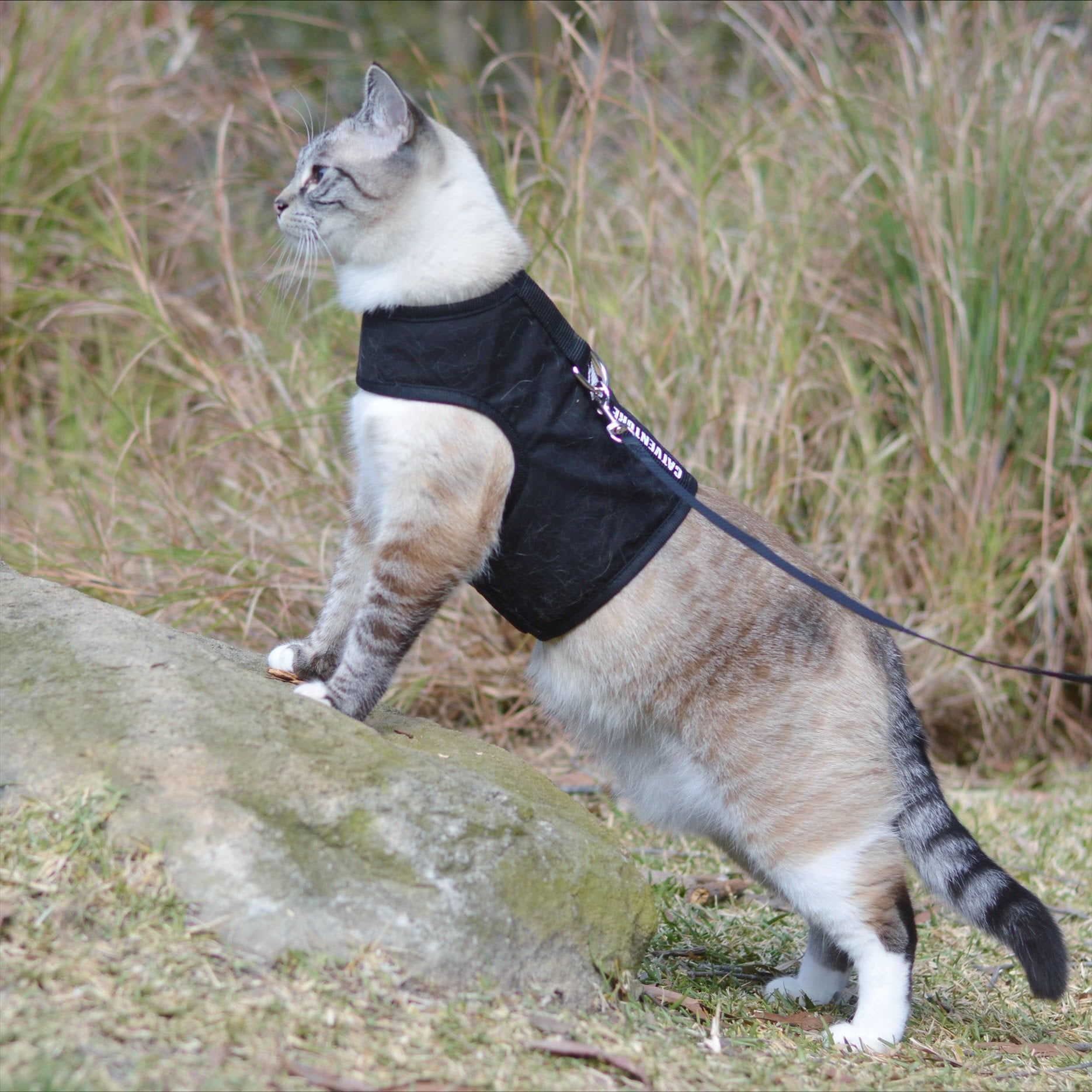
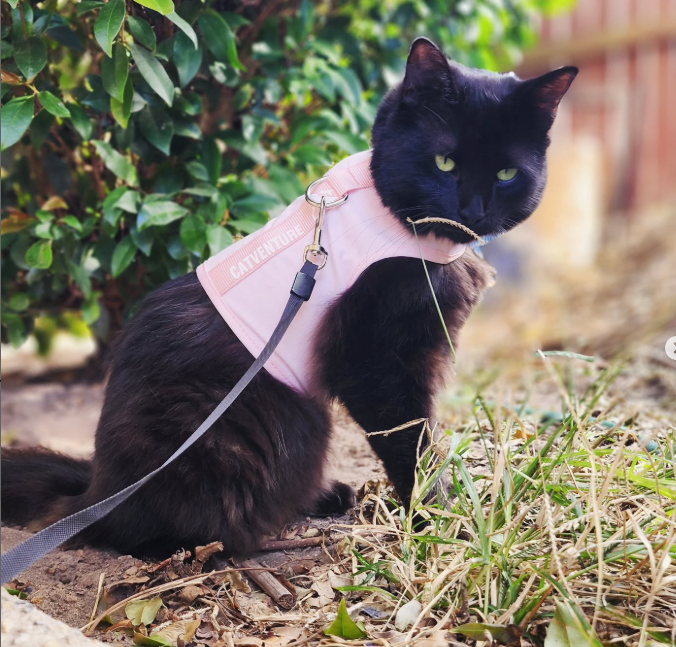
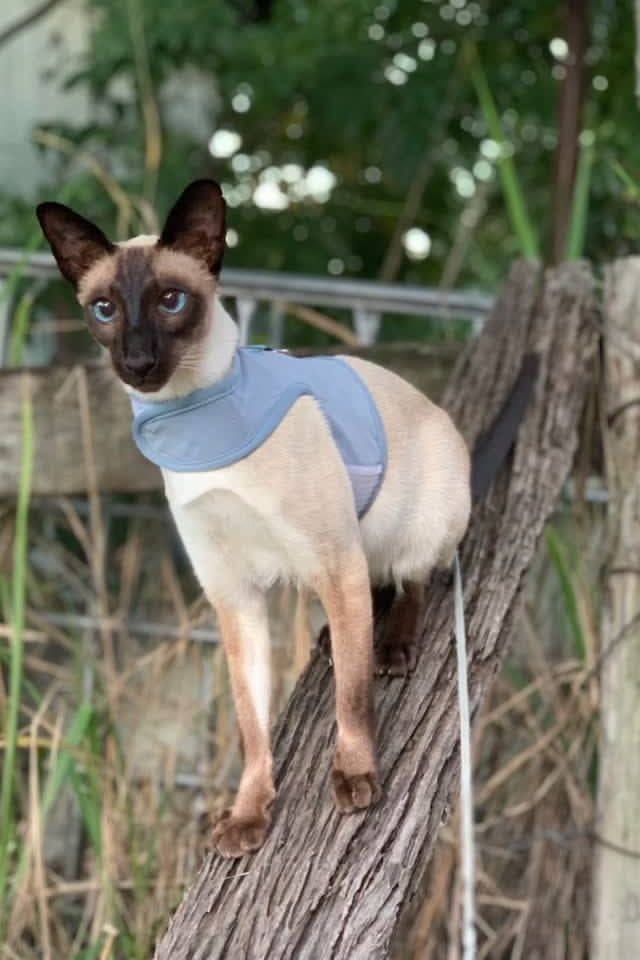
For many indoor cats, the ultimate enrichment is safe, supervised outdoor time using a well fitted cat specific harness and lightweight lead. It lets them smell the Australian air, feel the grass and listen to birds without the dangers of roaming.
The Catventure harness was designed specifically for Australian cats and Australian conditions, so they can explore while you stay in full control. Many of the cats in our reviews started exactly where your cat might be now, a little unsure. With slow, positive training their harness time has become the highlight of their day.

Indoor Cat Enrichment FAQ
Passive toys are helpful, but they are only one part of enrichment. Many cats ignore toy baskets if nothing interactive ever happens with them. Scheduled play sessions where you move the toy like prey, plus rotating which toys are out, makes a much bigger difference.
Some cats are naturally more chilled, but even relaxed cats benefit from mental and physical stimulation. Think less of “wearing them out” and more of “giving their brain and body something satisfying to do” each day. Even gentle play and simple puzzles can improve mood and reduce long term stress.
Focus on quality over quantity. A short play session in the morning and evening, plus some puzzle feeding or window access while you are gone, still creates a rich day. On days off, you can add extra harness time or new DIY projects to keep things interesting.
Enrichment is an important foundation, but it does not replace medical care or personalised behaviour help. If your cat shows aggression, severe anxiety or sudden changes, a vet check and professional behaviour advice are essential. Once health and safety are covered, enrichment becomes a powerful support tool on top.
Sensitive cats often need smaller steps. Place new items further away at first, pair them with treats and never force interaction. For harness training, start with very short indoor sessions, plenty of rewards and a gradual build up before going outdoors. Confidence is built slowly, not pushed.
Your Indoor Cat Can Live A Big, Enriched Life
Australian indoor cats can live long, safe and deeply satisfying lives when their environment is designed with their instincts in mind. You do not need to do everything at once. Start with one or two ideas from this guide and build from there.
And if your cat is ready for the next level of enrichment, supervised outdoor adventures in a Catventure harness can open up a whole new world of safe exploration.

